Are you struggling with inaccurate weight measurements that disrupt your quality control and inventory management?
For accurate measurement of weights, many industries like manufacturing, logistics, pharmaceuticals, and food processing rely on heavy-duty industrial scales. Precision weighing isn't just about getting numbers. It's about ensuring quality control, maintaining regulatory compliance, optimizing inventory management, and driving operational efficiency.
This guide is going to discuss the available types of scales available in the industry, how to choose appropriate equipment to meet your particular requirements, best practices to follow to calibrate and maintain it, integration solutions to use with the modern manufacturing system, and emerging technologies that are changing the weighing industry.
Key Takeaways
-
Match scale type to your industry and environmental conditions
-
Regular calibration ensures accuracy and compliance
-
IoT-enabled scales predict failures and reduce waste
-
ERP integration transforms weight data into actionable insights
Types of Industrial Scales
Below are the most popular types of industrial scales
-
Bench Scales
Bench scales are the most common digital scale types and are used for smaller items in laboratories, shipping, and quality control. Capacity is from five to several hundred pounds. These are ideal for portioning, ingredient measurement, and package verification
-
Truck Scales and Vehicle Scales
Truck scales and Vehicle scales are built to handle your biggest weighing jobs, such as measuring fully loaded trucks and containers. These systems can hold massive amounts of weight while providing the certified accuracy you need for official business transactions.
-
Floor Scales
Floor scales are robust platforms for palletized goods, drums, and larger containers. They can withstand tough warehouse environments. Having a low-profile design eliminates the need for ramps.
-
Crane Scales and Hanging Scales
Measure suspended loads in manufacturing and shipping by linking scales to overhead cranes. Crane scales lets you weigh loads without putting them down.
-
Portable Industrial Scales
Portable scales provide flexibility for measurements at any location. These are lightweight yet durable. Some battery-powered models enable weighing without electrical access
-
Counting Scales
Counting scales make managing inventory easy by automatically calculating exactly how many identical parts are in a pile. Instead of counting items one by one, these smart scales use weight to give you instant and accurate numbers for your stock.
-
Conveyor Scales
They integrate directly into production lines. They can continuously weigh materials during manufacturing and enable real-time production monitoring.
How to Choose the Right Industrial Scale
For capacity and readability, choose scales with maximum capacities higher than your heaviest anticipated load. This ensures longevity and maintains accuracy throughout the weighing range.
Environmental Considerations include
- Evaluate temperature extremes
- Consider moisture, dust, or corrosive chemicals
- Washdown environments demand stainless steel construction
- Hazardous locations require explosion-proof certifications
Accuracy class requirements and legal-for-trade applications demand NTEP certification. Pharmaceutical manufacturing may require USP standards. Understanding regulatory frameworks prevents compliance failures.
For integration capabilities, modern scales offer multiple communication protocols:
- Ethernet for reliable data transmission
- Wi-Fi and Bluetooth for flexible connectivity
- Industrial fieldbus for automation systems
- Seamless data flow to ERP, WMS, and MES platforms
Budget considerations balance the initial investment against the total cost of ownership. Premium scales deliver better long-term value through superior construction, extended calibration intervals, and lower maintenance requirements.
Industry-Specific Applications
Counting scales are utilized in Manufacturing and Production to check inventory in components, bench scales to check incoming materials, floor scales to aid in finished goods packaging, and conveyor scales to check production throughput.
The Pharmaceutical and Life Sciences industry needs the scales that are of a high accuracy level, with audit trail and user access control features, in accordance with the regulatory documentation, and to be validated in accordance with quality assurance requirements.
In the case of food Processing and Beverage, Logistics and Distribution, and Chemical and Petrochemical, the sanitary design is necessary along with the corrosion-resistant material, washdown capability, and NTEP-certified scales in packaged goods.
In the case of logistics, portable scales are used to check the received goods, floor scales to check the accuracy of delivery of the ordered goods, and a dimension system to optimize freight.
Explosion-proof scales are used in hazardous environments in chemical and petrochemical industries, and heavy-duty industrial scales with specialized purposes that include harsh process conditions.
Industrial Scale Calibration
Legal-for-trade scales typically require annual certification.
Calibration Frequency
- Usage frequency and daily load volume
- Environmental conditions
- Regulatory requirements
- Process criticality
Manufacturing environments often implement quarterly or monthly schedules.
Factors Affecting Accuracy
- Temperature changes cause component expansion/contraction
- Humidity affects electronics and causes corrosion
- Vibration from nearby equipment
- Improper installation on uneven surfaces
- Impact loads and mechanical wear
The Calibration Procedures compares scale readings against certified reference weights. Technicians test multiple points throughout the weighing range and adjust internal parameters to minimize error.
Calibration vs. Verification
Legal-for-Trade Compliance requires the devices to bear NTEP Certificates of Conformance and undergo rigorous testing.
Calibration Process
- Adjusts scale parameters to achieve specified accuracy
- Requires breaking security seals
- Only trained technicians should perform
- Legal-for-trade devices require licensed providers
Verification Process
- Confirms scales operate within acceptable tolerances
- Does not involve adjustments
- Uses certified test weights
- Operators can perform between formal calibrations
Facilities must maintain calibration records and implement verification schedules.
Troubleshooting Common Errors
1. Zero Drift Issues
Clean any buildup from under the platform and remove debris causing mechanical binding. Allow the system to stabilize the temperature and verify that nothing interferes with normal operation.
2. Overload Errors
Remove excess weight immediately to prevent damage. Check for mechanical obstructions and inspect load cell mounting hardware for binding. Ensure loads stay within rated capacity.
3. Communication Failures
Verify all cable connections are secure and undamaged. Ensure communication settings match between devices. Power cycle both the scale and connected equipment as needed.
4. Inaccurate Readings
Perform verification tests using certified weights across the operational range. Consider recalibration if the load cell remains sound. Contact a professional service for persistent accuracy issues.
5. Erratic or Unstable Readings
Check for air currents from HVAC systems and ensure nothing restricts platform movement. Inspect load cell cables and power cycle the indicator to resolve temporary glitches.
Integration with Manufacturing Systems
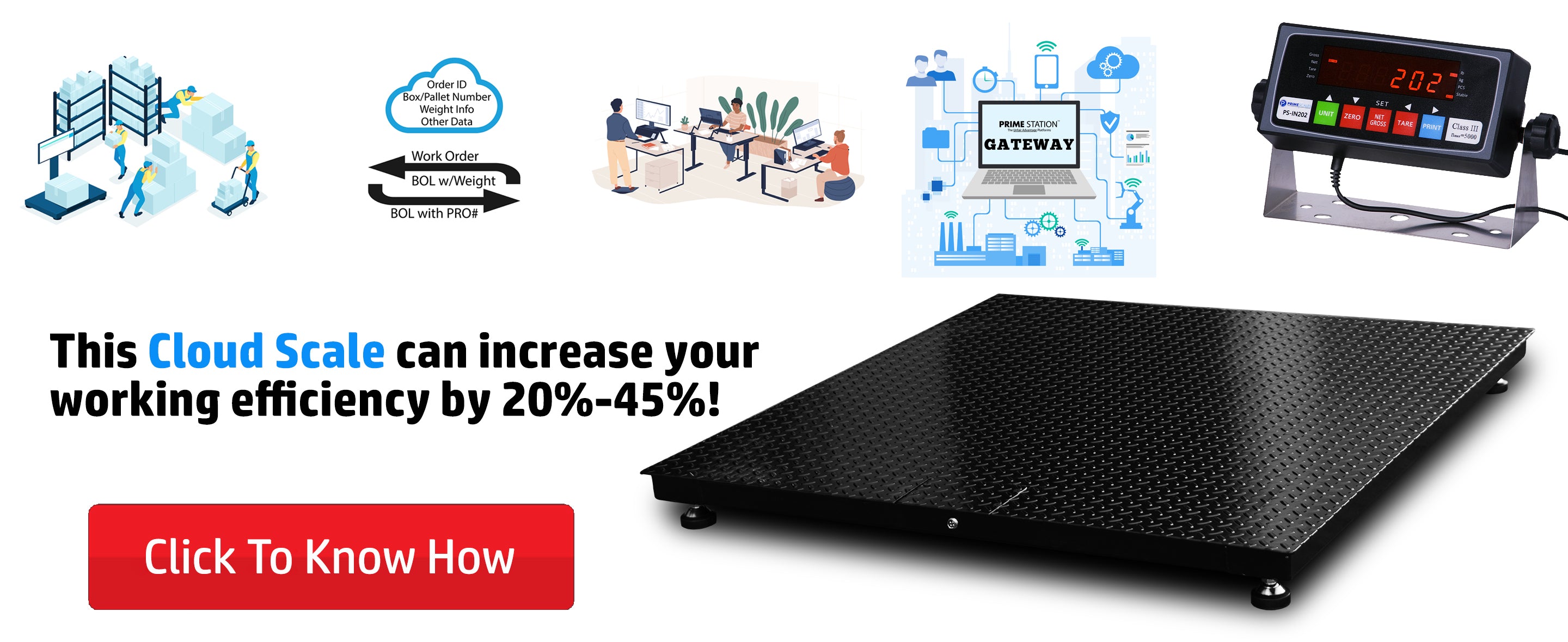
Benefits of integration include connected scales that eliminate manual data entry errors, accelerate production throughput, enable immediate production adjustments, maintain quality specifications, and support quality management systems automatically.
Integration Architecture
- Field-level connections link scales to PLCs
- Enterprise-level integration connects to ERP and WMS systems
- Middleware platforms translate between protocols
ERP/MES Integration Steps
The following are the easy integration steps:
Step 1: Assess Connectivity Requirements
Determine the transaction volume needs and decide between real-time and batch data transfer. Evaluate whether bidirectional communication is required for your system.
Step 2: Select Communication Methods
Choose Ethernet for high-speed data transmission, or wireless options like Wi-Fi or cellular networks. Mobile connectivity is important for portable scales.
Step 3: Implement Data Mapping
Transform raw weight readings into useful business information by associating values with product codes, batch numbers, and operator IDs.
Step 4: Establish Error Handling
Implement range checking to validate data, prevent duplicate transactions, and buffer data during any network interruptions.
Step 5: Create Actionable Reporting
Convert weighing data into operational intelligence by monitoring production rates, quality trends, and historical data for better decision-making.
Maintenance Tips
Daily Maintenance
- Visual inspections for physical damage
- Verify platforms remain level and debris-free
- Check cable connections
- Wipe down weighing surfaces
Weekly Maintenance
- Thorough cleaning of load cells
- Check junction box connections for corrosion
- Verify display functionality
- Perform span checks using certified test weights
Monthly Maintenance
- Inspect mechanical components
- Check load cell mounting hardware
- Examine cables for damage
- Clean indicator enclosures
Preventive Maintenance Programs Combine scheduled inspections with predictive monitoring. Track performance data to identify degradation patterns. Enable proactive component replacement before failures occur.
Environmental Protection
- Install away from extreme temperature sources
- Protect from direct water exposure unless rated for washdown
- Shield outdoor installations with appropriate enclosures
Costly Mistakes to Avoid
-
The first mistake is to focus on the Cost and not the Value. Budget purchases commonly work out to be costly in the long run because they are frequently recalibrated, have lower life, and cost more to maintain.
-
The second mistake is a low opinion of the Environmental Challenges Standard scales in extreme environments go dead early. Evaluate temperature limit, moisture exposure, and chemical compatibility.
-
Thirdly, the insurance of integration requirements scales that do not have the right communication capabilities are not able to integrate with the existing systems.
-
The fourth mistake is to ignore regulatory compliance. Decide compliance needs before purchase to avoid expensive equipment repair.
-
Mistake five is Poor Capacity Planning. Scales running with high capacity are subject to faster damage and lower precision.
Safety Certifications for Hazardous Environments
To effectively operate in hazardous environments, it is essential to understand the specific classifications and the corresponding safety requirements.
Hazardous Location Classifications
- Class I: flammable gases or vapors
- Class II: combustible dusts
- Class III: ignitable fibers
Certified Equipment Requirements
Certified systems incorporate explosion-proof enclosures or intrinsically safe circuits. Equipment must bear approval from recognized certification bodies.
Installation Requirements
- Conduit seals prevent explosive gases from traveling
- Grounding systems dissipate static electricity
- Enclosure maintenance ensures protective integrity
Make sure to do regular inspections and verify certification markings.
IoT and Smart Industrial Scales
Smart Scale Capabilities include collecting performance data, measurement results, usage patterns, and environmental conditions. Information flows to cloud-based analytics platforms where machine learning identifies efficiency opportunities and predicts maintenance needs.
Waste Reduction Applications
- Pharmaceutical: minimize material consumption through precise batching
- Food processing: reduce giveaway by tightening package weight control
- Chemical: decrease raw material losses through improved accuracy
Predictive Maintenance requires analysis of vibration patterns, temperature variations, and performance trends to identify failing components before breakdowns occur.
Waste Management Applications
Waste management relies on precise and efficient weighing solutions tailored to various operational needs.
- Transfer Station and Landfill: Vehicle scales provide accurate load measurements supporting fee calculations. NTEP-certified systems ensure transaction accuracy. Unattended operation improves facility efficiency.
- Field Operations: Portable scales enable field crews to verify container weights, preventing overloading. Real-time data transmission optimizes route planning.
- Waste Characterization: Accurate weighing data quantifies material streams, supports diversion initiatives, and identifies revenue opportunities.
Conclusion
In most industries, industrial scales are important for the accuracy and efficiency of operations. They are of different types, such as compact bench scales and extremely large floor and truck scales, which are used in different activities such as inventory counts, material checks, packaging, and production oversight.
Weighing can be converted into business intelligence in practice through integration with contemporary tools, e.g, IoT or predictive maintenance.
The correct choice of industrial scale and its proper management help companies maximize production, minimize waste, and fulfill legal and regulatory standards.
Industrial scales are indispensable instruments in manufacturing, logistics, pharmaceuticals, food processing, and other industries, as weight data are converted into insights to facilitate continuous improvement and a competitive advantage.
Frequently Asked Questions
-
What are the different types of industrial scales?
Bench scales, floor scales, portable scales, truck scales, crane scales, counting scales, and conveyor scales.
-
How do I choose the right industrial scale?
The factors to consider include capacity requirements, environmental conditions, accuracy requirements, integration capabilities, and regulatory compliance.
-
What are the best practices for maintaining accuracy?
Cleaning and inspection every day, checking the span every week, more in-depth maintenance every month, and preventive programs..
-
How often should industrial scales be calibrated?
It is based on volume of use, conditions of the environment, and the regulatory demands. A certification is usually required of legal-for-trade scales on a yearly basis.
-
How do I troubleshoot common problems?
Make sure there is no environmental interference or mechanical binding, damaged cables, and correct connections. Carry out certification weight tests.