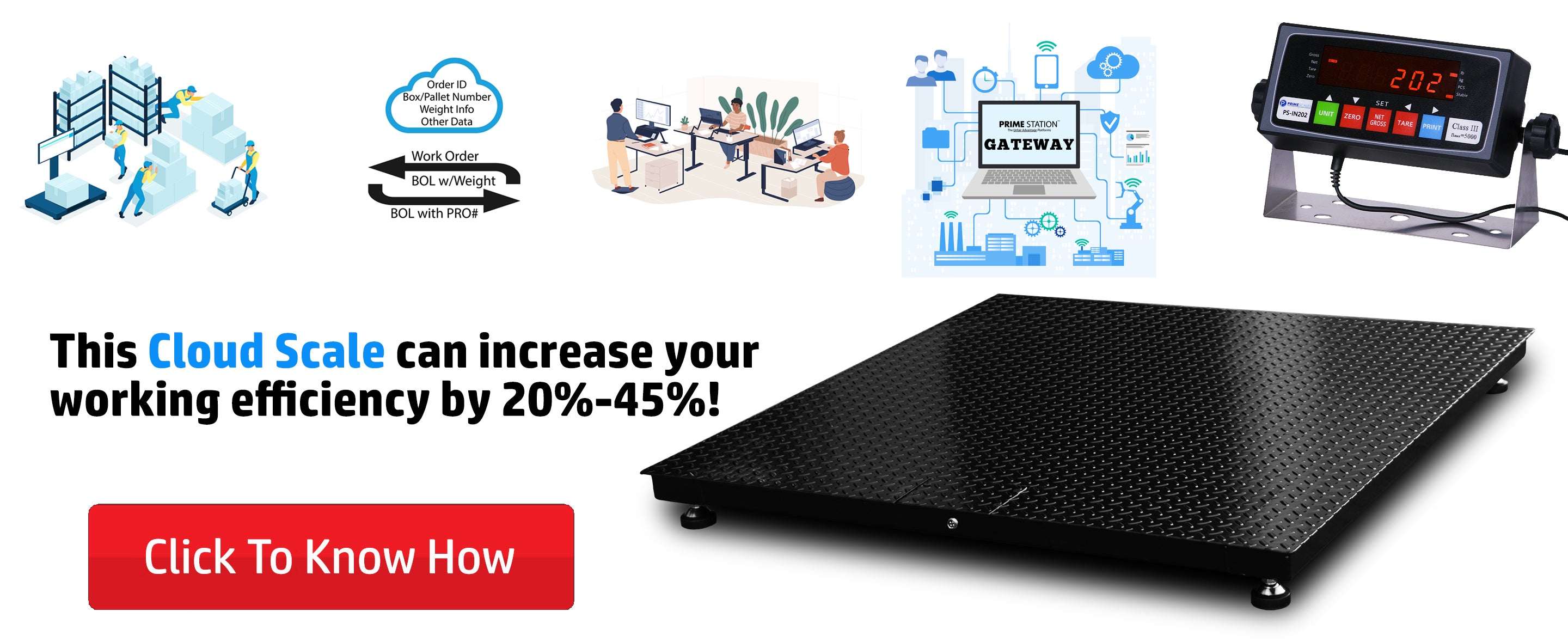
Your scale says 2,400 pounds. The customer's scale says 2,250. The truck can't leave, and your boss wants to know who got it wrong.
This happens more than most warehouse managers want to admit. A scale can look fine on the outside and still give inaccurate weight readings for months. Nobody notices until a load gets stopped at the dock, a customer disputes an invoice, or an inspector pulls your records.
Most of the time, the brand isn't the problem. The scale was the wrong type for the job, sized too close to its weight limit, or missing the certification your business legally needs. There are dozens of commercial scales on the market, which makes picking the right one feel harder than it should. Let's break down exactly what to check before you buy, so the next dispute doesn't start at your dock.
Key Takeaways
- Get NTEP certification if a scale reading decides what a customer pays.
- Choose a capacity higher than your heaviest daily load.
- Floor scales, pallet scales, and bench scales do different jobs.
- Check your scale often so small problems don’t turn into big ones.
Why Small Errors Become Big Problems
One wrong reading on one pallet is no big deal. But a dock that ships hundreds of loads a week makes that same mistake hundreds of times. That leads to arguments, re-weighing, and unhappy customers.
Where Wrong Readings Come From
Most of the time you don’t need a new scale. You need a better setup. Look at these first:
- A floor that is uneven or cracked
- Shaking from machines or dock doors nearby
- Loads placed to one side instead of the middle
Any of these can cause inconsistent measurements, even on a good scale.
NTEP Certification and Legal-for-Trade Rules
If you charge people by weight, you need an NTEP-certified commercial scale. NTEP certification means the scale was tested and passed the accuracy rules that state inspectors use.
This is part of the legal-for-trade requirements. In most states, commercial weighing regulations apply any time the price depends on the scale reading. If an inspector finds an uncertified scale, you can get fined. Start with the NTEP-certified scales if this sounds like your business.
When Legal-for-Trade Applies
- Selling scrap, produce, or recycling by the pound
- Charging for freight by weight
- Settling a contract based on a certified reading
Floor Scales, Pallet Scales, and Bench Scales
Pick a scale by how the load shows up, not only by how heavy it is.
A commercial floor scale is made for big loads moved by a forklift or pallet jack. Bench scales sit on a table and weigh small parts and boxes. A commercial pallet scale sits low and has ramps. That fixes the difficulty of weighing heavy pallets, because you don’t have to lift the load or risk tipping it.
How to Select a Heavy-Duty Scale for Warehouse Operations
First, find your heaviest regular load. Then pick a scale that can take more than that. This one step avoids the most common buying mistake.
Capacity and Overloading Weighing Equipment
Overloading weighing equipment slowly wears out the load cells. The scale may not break right away. It just starts giving off inaccurate readings. Say a scale is rated for 5,000 pounds and you weigh 4,800-pound pallets all day. That scale is always near its limit.
Signs Your Scale Is Too Small
- The numbers jump around under a normal load
- The platform bends or sinks a little
- Error messages show up on busy shifts
Industrial Platform Scales Heavy Duty: What Build Quality Means
Two scales can have the same weight rating and still be very different. Industrial platform scales are heavy-duty enough for forklifts and have thick steel decks and sealed load cells.
A thin deck might hold its rated weight one time. But forklift wheels crossing the same spot every day will wear it down fast. That’s often where cheap heavy-duty scales give out first.
Best Commercial Scale for Heavy Industrial Daily Use
The best commercial scale for heavy industrial daily use fits how busy your floor is, not only how much you weigh. An industrial commercial scale that runs three shifts needs to be tougher than one used twice a week. The industrial scales here are made for that kind of nonstop use.
|
Scale Type |
Best For |
Capacity |
Daily Use |
|
Bench scales |
Small parts, boxes |
Light to medium |
Now and then to often |
|
Pallet scales |
Heavy pallets, low height |
Medium to heavy |
Every day |
|
Floor scale |
Forklift and pallet jack traffic |
Heavy to extra heavy |
All day, all shifts |
Calibration and Measurement Repeatability
A scale that is right on day one won’t stay right forever. Scale calibration should be on your calendar. Don’t wait until something looks wrong.
Certified scale accuracy needs regular care. Put a known weight on the scale, write down the number, and do it again later. Good measurement repeatability means the same weight gives the same number every time. If that changes, you caught the drift early.
Final Thoughts
The real benefit of choosing the right scale isn't one perfect reading. It's months and years of numbers your team, your customers, and any inspector can trust without a second look. That 2,400 vs. 2,250 dispute at the dock doesn't happen again once you've matched the right scale to the right job.
Start with three steps. First, list your heaviest daily load and pick a scale rated well above it, not right at the edge. Second, confirm whether your business needs an NTEP-certified commercial scale for legal-for-trade work, because guessing wrong here costs more than the scale itself. Third, set a real calibration schedule and stick to it, instead of waiting for a customer to catch the drift for you.
Check the NTEP-certified collection if your transactions depend on weight, and pair whatever scale you choose with regular checks against a known weight. That combination stops more disputes than any single feature on a spec sheet ever will.
Frequently Asked Questions
1. How do I choose the right scale for heavy loads?
Match the capacity to your heaviest regular load, then add extra room above it. Pick a floor or pallet scale made for forklift traffic, not a light-duty one.
2. How accurate are commercial weighing scales?
NTEP-certified scales meet strict accuracy limits when tested. In daily use, accuracy still depends on calibration, a level floor, and regular checks, not just the sticker.
3. What does NTEP certification mean for a commercial scale?
It means the scale passed testing and meets accuracy rules for trade. It matters if you charge customers or settle payments by weight.
4. What features should I look for when buying a heavy-duty commercial scale?
Look for sealed load cells, a thick steel deck, overload protection, and a capacity above your heaviest daily load. Build quality matters as much as the number.
5. How much weight can a commercial scale handle?
It depends on the type. Bench scales hold a few hundred pounds. Industrial floor scales can hold tens of thousands. Always check the exact capacity rating first.