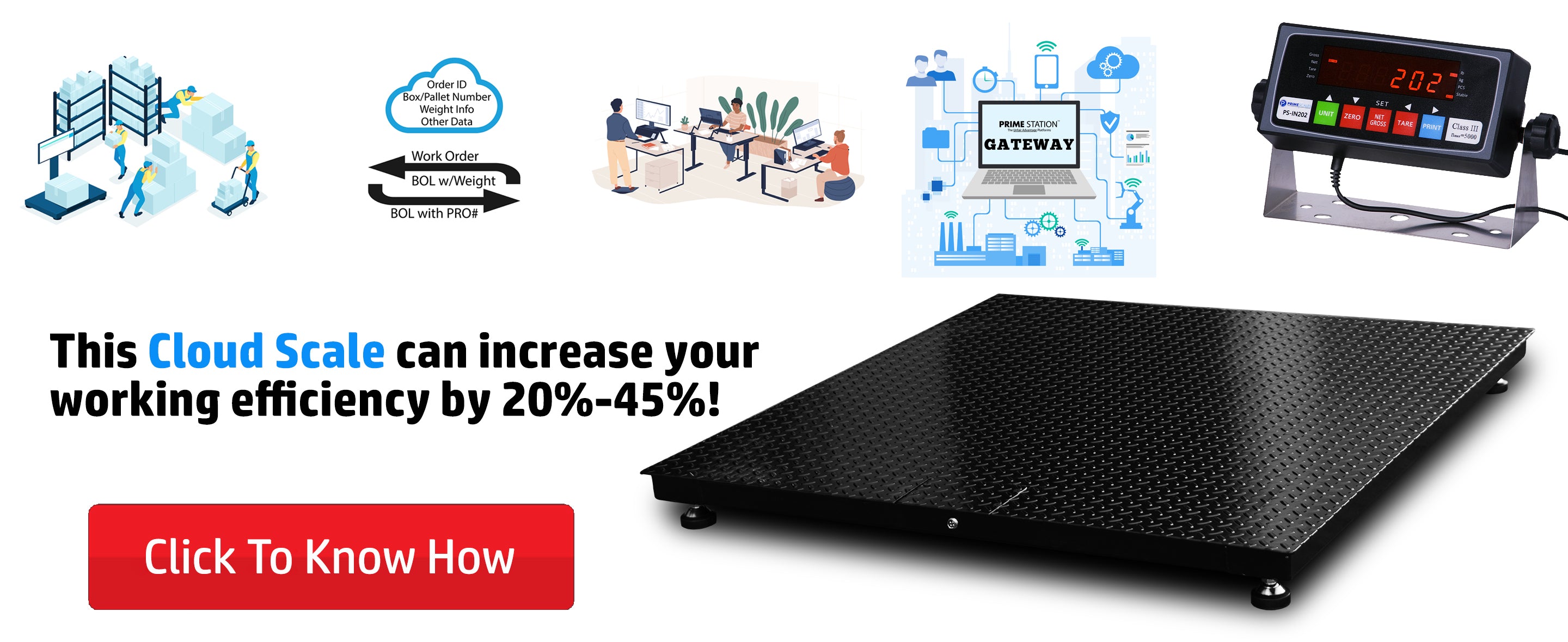
Are Your Manual Weighing Processes Slowing Down Your Production Line? You're still writing down weights by hand. Then typing them into spreadsheets. Then, enter them into your computer system again. Sound familiar?
This wastes time. It creates errors. And it's costing you money every single day. Modern industrial scales can talk directly to your computer systems. No more manual entry. No more delays.
Just automatic data flow that makes your factory run smoother. When you connect your industrial scales to your business software, you turn simple weighing tools into smart data collectors.
Key Takeaways
- Real-time data flow sends weight information instantly to your systems, cutting production time by 30%.
- Automated weighing systems remove human error and reduce labor costs.
- Smart workflow optimization triggers automatic actions like inventory updates and quality alerts.
- Legacy scale integration works with your old equipment using modern bridge technology.
Why Scale Integration Saves You Money
Every manual weight entry creates three chances for mistakes. Your worker reads the scale. They write it down. Then they type it into the computer. Each step takes time and can go wrong.
Connected industrial digital scales skip all that. The weight goes straight from the scale to your system in seconds. Your inventory updates automatically. Your shipping department gets accurate weights without waiting.
Cost of Manual Processes
Manufacturing system integration cuts costs by 23%. That's a huge saving. Here's what you lose without it:
- Production stops when workers pause to record measurements. Those seconds become hours of lost work each week.
- Quality problems grow because you find issues too late. By the time someone notices, you've made hundreds of bad products.
- Inventory mistakes pile up when manual entries don't match reality. You run out of materials or order too much.
- Compliance issues hit regulated industries hard. You need timestamped, accurate records that manual systems can't provide.
Integrating Weighing Tech in Production Lines
Modern industrial weighing solutions connect through simple methods. You pick what works for your factory and equipment.
1. Direct Connection to Business Software
Can industrial scales be integrated with ERP software? Yes, easily.
Today's heavy-duty scales have built-in connections. Ethernet ports. USB cables. Wireless options. They talk directly to software like SAP, Oracle, and Microsoft Dynamics.
Here's what happens automatically:
-
Your inventory updates when you weigh materials
-
Batch records create themselves with exact weights
-
Shipping papers are generated with the correct package weights
-
Reorder alerts trigger when supplies run low
-
Weight records are saved with timestamps for audits
This weighing scale automation closes the gap between your factory floor and your computer records.
2. Connecting to Factory Control Systems
Process manufacturers need their industrial weighing scale equipment to talk to control systems. Modern scales support factory protocols like OPC UA and Modbus.
Your systems watch production happen in real-time and adjust automatically based on weight readings. When filling containers, the system stops the filler at the exact target weight.
3. Mobile Scales That Stay Connected
You need portable industrial scales that move around but still send data. Modern portable scales use Bluetooth and WiFi. They transmit weights no matter where they are.
You can weigh ingredients at different mixing stations. Check packages at multiple shipping docks. All measurements flow to your central system automatically. No disconnected data or lost information.
Common Problems and Smart Solutions
Integration brings clear benefits. But you'll hit some bumps. Knowing them helps you plan better.
-
Making Old Scales Work with New Software
Is it possible to integrate legacy industrial scales with modern software? Yes, definitely.
Your old scales work fine. They just can't connect to networks. Instead of replacing them, you add bridge devices. Protocol converters. Industrial gateways. These grab data from old scale displays and send it to modern systems.
This costs less than new scales. You keep your working equipment. And you still get integration benefits.
-
Most Common Challenges When Integrating Weighing Systems
Data compatibility causes the most headaches. Different scales speak different languages.
Your scale outputs pounds. Your software wants kilograms. Your scale shows three decimal places. Your system needs two.
You need translation software in the middle. It converts units. Fixes decimal places. Validates data before sending it forward. Modern tools handle this automatically once you set the rules.
-
Building Strong Factory Networks
Industrial weighing systems work in tough places like dust, heat, vibration, and moisture. Regular office network equipment fails here.
You need industrial-grade network gear. Switches rated for factory conditions. Stronger cables. Better wireless access points.
For wireless scales, check signal strength everywhere. Add backup connections so temporary dropouts don't lose data.
-
Keeping Your Data Safe
How secure is data transfer between industrial scales and manufacturing systems? Very secure when done right.
Weight data often contains sensitive production information. Customer orders. Secret formulations. Production volumes.
Here's what protects your data:
-
Encrypted connections between scales and systems
-
Separated networks for weighing equipment
-
Password controls limit who can change settings
-
Regular security checks find weak spots
Data Sharing With Manufacturing Systems
Modern industrial weighing solutions share more than just weight numbers. They've become smart information collectors.
Basic Weight Information
The foundation includes multiple weight types:
-
Gross weight (everything on the scale)
-
Tare weight (just the container)
-
Net weight (actual product weight)
-
Running totals (accumulated weights)
-
Weight ranges (minimum and maximum values)
These measurements form the core data your systems need.
Rich Context Information
Beyond simple weights, integrated scales capture details that make data useful:
Transaction details show who weighed what, when, and where. Operator names. Exact timestamps. Scale locations. Product codes. This links every weight to specific jobs and batches.
Quality metrics include statistics for process control. Standard deviations. Average weights. Out-of-range alerts. This helps you maintain consistent quality.
Equipment status reports scale health and calibration state. Environmental conditions. Error messages. This enables preventive maintenance before scales fail.
Tracking codes from barcodes and RFID tags connect weights to specific materials and products. Complete traceability from raw material to finished product.
All this information flows automatically into your manufacturing systems. It enables analysis and automation impossible with disconnected scales.
Getting the Best Return on Your Investment
Make your digital industrial scales project succeed by focusing on what matters.
-
Clear Goals: Pick specific problems to solve. Reduce labor costs. Improve compliance. Speed up production. Measure your current performance so you can prove improvements later.
-
Proper Communication: Production workers use scales daily. Quality managers need accurate data. IT staff maintain systems. Get input from all of them before you start.
-
Gradual Progress. Don't integrate everything at once. Pick your biggest problem area first. Learn what works. Then expand to other areas.
-
Professional Handling: Automated systems still need humans who understand them. Budget time for thorough training of staff.
-
Ongoing Support: Integration never ends. Systems need monitoring and updates. Build relationships with vendors who provide continued help.
The Road Ahead
Industry is changing manufacturing. Industrial-scale integration will get even smarter.
Artificial intelligence will identify quality issues before they occur. Edge computing will let scales make decisions locally. Cloud connections will monitor weighing operations across multiple factories worldwide.
Tomorrow's industrial weighing systems won't just measure weight. They'll be intelligent parts of bigger manufacturing networks. They'll drive continuous improvement across your entire operation.
Conclusion
Connecting industrial scales to your manufacturing systems changes everything. Simple measuring becomes a strategic advantage. You gain accuracy. Cut costs. Speed production. Improve quality control.
The technology exists today. Whether you're shopping for industrial scales for sale or connecting existing equipment, you can eliminate manual processes now.
Start by looking at your current weighing setup. Find your biggest pain points. Quality problems. Compliance headaches. Manual entry costs. There's an integration solution for your specific needs. Manufacturing workflow optimization starts with connecting your industrial weighing solutions to the systems running your business.
Frequently Asked Questions
-
How does scale integration boost workflow efficiency?
It eliminates manual data entry and cuts errors by 90%. Real-time data flow triggers automatic actions like inventory updates and quality alerts without human involvement.
-
What data do scales share with manufacturing systems?
Beyond weights, scales send timestamps, operator IDs, product codes, batch numbers, and equipment status. This creates complete traceability and enables predictive maintenance of your equipment.
-
Can legacy scales integrate with modern software?
Yes, through bridge devices that grab data from old indicators and translate it for modern systems. This extends equipment life while gaining integration benefits affordably.
-
What challenges arise in weighing system integration?
Data format differences, network infrastructure needs, legacy equipment connections, and security concerns are typical. Proper planning and translation software solve these problems.
-
Is scale-to-system data transfer secure?
Very secure with encrypted connections, separated networks, and access controls. Regular security audits and industrial cybersecurity best practices protect your sensitive production data.